
What Are Stablecoins? A Complete Guide to Issuance, Reserves and Regulation
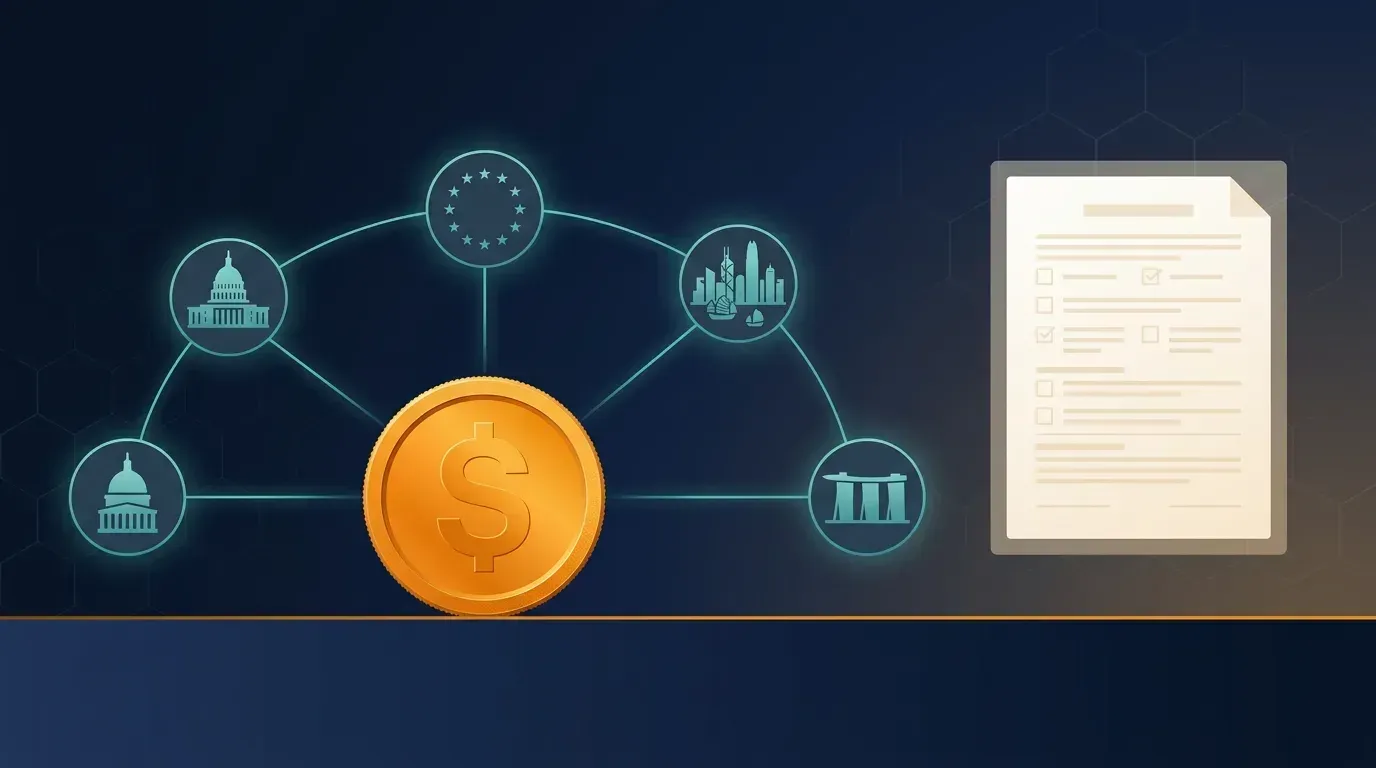
A stablecoin is a cryptocurrency pegged to a fiat currency or other asset, designed to maintain a stable value. It combines the transmission efficiency of blockchain with protection against the price volatility of assets like Bitcoin, making it widely adopted for cross-border payments, decentralized finance (DeFi) and institutional-grade settlement.
As of mid-2025, the global stablecoin market capitalization has exceeded USD 260 billion, with annual transaction volume reaching approximately USD 37 trillion in 2024—far surpassing Bitcoin's trading volume over the same period. Stablecoins are no longer just internal tools within the crypto market but are gradually entering the mainstream financial infrastructure landscape.
Meanwhile, regulatory frameworks across major jurisdictions are accelerating their implementation. The U.S. GENIUS Act was formally signed into law in July 2025, Hong Kong's Stablecoin Ordinance took effect in August of the same year, and the EU's MiCA stablecoin provisions have been mandatory since mid-2024. For businesses planning to issue stablecoins or integrate them into their operations, compliance has become a mandatory threshold rather than an optional consideration.
This article begins with the basic concept of stablecoins, outlines the operational mechanisms of the three main types, details reserve and licensing requirements across jurisdictions, and examines the core risks faced by issuers, providing decision-makers with an actionable reference framework.
What Is a Stablecoin?
A stablecoin is a cryptocurrency that binds token value to a specific reference asset through a pegging mechanism. Reference assets are typically fiat currencies such as the US dollar or euro, but can also include commodities like gold or a basket of assets. Unlike Bitcoin, stablecoins are designed for value stability rather than price appreciation.
The core value of stablecoins lies in combining the advantages of two types of tools: blockchain programmability, cross-border transfer capability and clearance without intermediaries, alongside the value stability of fiat currency. This gives them clear practical utility in international remittances, on-chain settlement and hedging digital asset transactions.
From a regulatory perspective, there is no unified global standard for defining stablecoins. Different jurisdictions classify them as e-money, payment instruments, crypto assets or virtual assets, directly impacting which licence issuers must apply for and which rules they must follow. This classification difference is the starting point businesses must pay closest attention to when conducting jurisdiction selection.
Three Types: Fiat-Backed, Crypto-Backed and Algorithmic
Stablecoins are typically divided into three types based on the mechanism they use to maintain price stability. Each type differs substantially in its risk profile and regulatory treatment.
Fiat-Backed
The issuer holds equivalent fiat currency or high-liquidity assets (such as short-term government bonds or cash equivalents) in traditional financial institutions as reserves and mints stablecoins accordingly. When a user deposits USD 1, the issuer mints one stablecoin; when the user redeems, the issuer burns the token and returns the equivalent fiat currency. USDT and USDC both fall into this category.
This type of stablecoin features transparent mechanisms and strong value stability, currently holding the highest market share and serving as the primary focus of major regulatory frameworks. Its main risk lies in centralization: users must trust that the issuer actually holds sufficient and high-quality reserve assets. During the 2023 Silicon Valley Bank collapse, USDC briefly depegged because approximately USD 3.3 billion in reserves were held at the bank—a typical example of this risk.
Crypto-Backed
Issued on-chain via smart contracts using other cryptocurrencies as collateral. Because the collateral itself is highly volatile, these stablecoins typically employ over-collateralization mechanisms—for example, depositing USD 150 worth of Ethereum to mint USD 100 in stablecoins. MakerDAO's DAI is a representative case.
These stablecoins offer a higher degree of decentralization, with collateral information publicly verifiable on the blockchain. The downside is lower capital efficiency and exposure to large-scale liquidation risk during sharp declines in the crypto market. Currently, most mainstream regulatory frameworks have not yet established specialized issuance licence systems for this type of stablecoin.
Algorithmic
Relies not on physical collateral but on preset algorithms to automatically adjust token supply to maintain the price peg. Theoretically, this offers high capital efficiency and decentralization advantages.
However, algorithmic stablecoins have proven extremely unstable under extreme market conditions. In May 2022, TerraUSD (UST) collapsed, forming a "death spiral" with its sister token LUNA and evaporating over USD 30 billion in market value. This event directly drove global regulators to tighten their stance on such products. Currently, the UAE's ADGM and most major jurisdictions have explicitly prohibited or do not recognize the issuance of algorithmic stablecoins.
Reserve Assets: The Core Compliance Threshold
Regardless of jurisdiction, reserve asset management is the core of a stablecoin issuer's compliance system. While major frameworks differ in details, they generally establish the following common principles:
- 1:1 Full Backing: Each circulating stablecoin must be backed by equivalent high-liquidity assets; fractional reserve models are not permitted.
- Asset Quality Restrictions: Reserve assets are typically limited to cash, bank deposits, short-term government bonds or cash equivalents; high-risk assets or equity-type assets are not allowed.
- Segregation of Assets: Reserve funds must be strictly segregated from the issuer's proprietary funds, typically requiring placement in independent custodial accounts or trust structures.
- Regular Audits and Disclosure: Issuers must regularly (typically monthly) disclose reserve asset composition and undergo verification by independent auditing firms.
- Redemption at Par Value: Holders have the right to redeem stablecoins at par value, and redemption requests must be processed within a specified timeframe.
Compliant management of reserve assets is not only a regulatory requirement but also the foundation of market trust. Tether has long faced questions about reserve transparency, while Circle has built greater trust in institutional markets through monthly audit reports and reserves held in BlackRock-managed money market funds.
Regulatory Frameworks in Key Jurisdictions
The regulatory landscape for stablecoins is taking shape rapidly. Below is an overview of the four most influential jurisdictional frameworks currently in place.
United States: The GENIUS Act (Effective July 2025)
The U.S. "Guiding and Establishing National Innovation for U.S. Stablecoins" Act (GENIUS Act) was signed into law by the President on July 18, 2025, marking the first federal-level specialized legislation for stablecoins in the United States.
The Act establishes a dual-track regulatory system: issuers with circulating supplies exceeding USD 10 billion must undergo federal regulation; smaller issuers may choose to operate under state regulatory frameworks. Key compliance requirements include:
- Reserve assets must be high-liquidity assets such as cash and short-term U.S. Treasuries, fully backed 1:1
- Issuers must obtain appropriate licences; both banking and non-banking institutions may apply
- Regular public disclosure of reserve asset composition reports, verified by certified public accounting firms
- Establishment of comprehensive AML/CFT compliance systems subject to the Bank Secrecy Act
- Prohibition on paying interest to holders
- Issuers with market capitalizations exceeding USD 50 billion must submit audited annual financial statements
The Act effectively ends the era of unregulated stablecoin issuance in the U.S. market. Any stablecoin issuer wishing to operate in the United States must be incorporated into the federal or state licensed regulatory system.
European Union: MiCA Framework (Applicable to Stablecoins from June 2024)
The EU's Markets in Crypto-Assets Regulation (MiCA) divides stablecoins into two categories: E-Money Tokens (EMT) and Asset-Referenced Tokens (ART). Each follows different authorization paths and regulatory requirements.
- EMT: Pegged to a single official currency (such as the US dollar or euro), must be issued by authorized credit institutions or electronic money institutions. Circle's USDC has obtained French EMI authorization and can operate compliantly within the EU. Tether did not apply for MiCA authorization, and USDT has been delisted by several EU-regulated exchanges.
- ART: Pegged to a basket of assets or non-single fiat currencies, requiring establishment of a registered office in an EU member state and application for authorization from the competent authority in that country. Own funds requirements are the highest of the following three: EUR 350,000; 2% of average reserve assets; or one-quarter of the previous year's fixed overheads.
Algorithmic stablecoins explicitly do not qualify as ART or EMT under MiCA and cannot be issued compliantly within the EU. MiCA also limits the usage scale of non-euro-denominated stablecoins to prevent currency substitution risks.
For issuers seeking to enter the EU market, issuing EMT requires obtaining an EMI or banking licence in member states such as France, Ireland or Malta. Holding only a CASP licence does not permit stablecoin issuance.
Hong Kong: Stablecoin Ordinance (Effective August 1, 2025)
Hong Kong officially implemented the Stablecoin Ordinance on August 1, 2025, becoming the first jurisdiction globally to establish a comprehensive licensing regime for Fiat-Referenced Stablecoins (FRS). The Hong Kong Monetary Authority (HKMA) serves as the competent authority, responsible for issuing licences and supervising compliance.
Key requirements include:
- Minimum paid-up share capital: HKD 25 million or equivalent foreign currency
- Reserve assets must be high-quality liquid assets: cash, bank deposits with maturities not exceeding three months, and government bonds with residual maturities not exceeding one year
- Reserve assets must match the reference currency (currency matching principle)
- Holders have an absolute right to redeem at par value, with redemption requests processed within one business day
- Establishment of AML/KYC compliance systems
Among 36 applicant institutions, the HKMA issued the first two licences in April 2026, granted to The Hongkong and Shanghai Banking Corporation Limited and Anchorpoint Financial, a joint venture formed by Standard Chartered Bank, HKT and Animoca Brands. For businesses intending to establish compliant stablecoin operations in the Asia-Pacific region, Hong Kong is currently one of the clearest framework choices.
Singapore: MAS Regulatory Framework
The Monetary Authority of Singapore (MAS) brings eligible stablecoins under the Payment Services Act, requiring non-bank issuers with circulating supplies exceeding SGD 5 million to apply for a Major Payment Institution (MPI) licence.
Reserve management requirements are relatively strict: reserve assets are limited to cash, cash equivalents and bonds with residual maturities not exceeding three months, and must be held by Singapore-licensed custodians or overseas institutions with branches in Singapore, with segregated accounts established. MAS also requires the daily market value of reserve assets to exceed 100% of the stablecoin circulation, with redemptions completed within 5 business days.
Singapore's crypto and VASP licence application thresholds are high, with MAS stating clearly in 2025 that such licences will be reviewed on a case-by-case basis, maintaining strict overall approval standards.
Common Compliance Requirements for Issuers
Although regulatory frameworks differ in detail across jurisdictions, the core requirements for stablecoin issuers under major frameworks are highly convergent. Below is the universal compliance baseline issuers need to meet before launch:
- Legal Entity Formation: Register a compliant entity in the target jurisdiction meeting minimum capital requirements
- Licence Application: Apply for appropriate payment institution, electronic money institution or crypto asset service provider licences based on issuance scale and business model
- Reserve Management System: Establish reserve asset allocation, custody and daily valuation mechanisms that meet regulatory requirements
- AML/CFT Compliance System: Implement FATF-compliant anti-money laundering and counter-terrorist financing programs, including customer due diligence (KYC), transaction monitoring and suspicious transaction reporting
- Regular Information Disclosure: Publicly disclose reserve asset reports at required frequencies and undergo independent audits
- Redemption Mechanism: Establish clear redemption procedures ensuring holders can redeem at par value within the specified timeframe
- Governance and Risk Management: Establish board governance structures, operational risk management and business continuity plans that meet regulatory requirements
When selecting an issuance jurisdiction, businesses need to comprehensively consider regulatory maturity, capital thresholds, licence approval timelines and mutual recognition mechanisms in target markets. GSS Legal's jurisdiction advisory services can help businesses identify the optimal path at an early stage, avoiding repeated costs due to inappropriate choices.
Building an AML and compliance system, along with supporting banking and EMI/PSP account opening arrangements, are equally critical links determining whether stablecoin issuers can operate smoothly after obtaining licences.
Key Risks and Regulatory Challenges
The "stability" of stablecoins is relative, not absolute. When evaluating stablecoin businesses, decision-makers need to face the following structural risks squarely:
Depegging Risk
Declining reserve asset quality, issuer credit crises or market panic can all cause stablecoin prices to deviate from their peg values. TerraUSD (UST) collapsing to near zero in 2022 represents an extreme case of algorithmic stablecoin depegging. Fiat-backed stablecoins also face depegging risk: in 2023, USDC briefly fell to approximately USD 0.87 because part of its reserves were held at the failed Silicon Valley Bank.
Regulatory Compliance Risk
Global regulatory frameworks continue to evolve rapidly, with significant differences between jurisdictions. Businesses launching issuance before regulatory frameworks are clarified may face high subsequent rectification costs and blocked market access. Tether's failure to obtain MiCA authorization, resulting in restricted use of USDT in the EU market, is a real-world manifestation of this risk.
Concentration and Systemic Risk
As stablecoin market capitalizations expand, the reserve asset sizes of large issuers have become sufficient to impact traditional financial markets. Tether's holdings of U.S. Treasuries exceed USD 100 billion, placing it among the world's major holders. Should mass redemptions occur, forced selling of Treasuries could shock market interest rates. This systemic linkage is one of the core motivations for regulators strengthening supervision.
Cross-Border Regulatory Arbitrage and Fragmentation
Differences in regulatory standards across jurisdictions create arbitrage opportunities for certain issuers but also increase the compliance complexity of cross-border operations. Issuers operating in multiple markets must simultaneously satisfy multiple rule sets, achieving multi-jurisdictional compliance parallelism in AML, reserve disclosure and redemption mechanisms.
Market Size and Development Trends
According to Citibank research, under a base-case scenario where national regulatory policies are clarified, stablecoin market capitalization could reach USD 1.6 trillion by 2030; under an optimistic scenario, it could reach USD 3.7 trillion. The prerequisite for this forecast is precisely the implementation of compliance frameworks, not technological innovation itself.
In terms of application directions, stablecoin usage scenarios are expanding from cryptocurrency trading mediums to broader payment infrastructure. Cross-border B2B trade settlement, supply chain finance, retail payments and real-world asset (RWA) tokenization are currently the fastest-growing areas. Traditional financial institutions and payment giants (PayPal, Visa, Mastercard) are also accelerating their presence, further driving the mainstreaming process of stablecoins.
Circle's successful listing on the New York Stock Exchange in June 2025 marked a landmark event for the stablecoin industry's move toward mainstream capital markets. Regulatory compliance has transformed from a cost item into a competitive advantage; issuers with complete licence systems and transparent reserves will occupy more favorable positions in the institutional client market.
Conclusion
The core logic of stablecoins is not complex: they are payment instruments circulating on blockchains and pegged to assets such as fiat currencies. However, the issuance of stablecoins involves a series of regulatory obligations including licence applications, reserve asset management, AML compliance and regular disclosure, with complexity far exceeding that of merely holding or using stablecoins.
Regulatory frameworks in the United States, European Union, Hong Kong and Singapore have successively been implemented. While these frameworks differ in details, they are highly consistent on the three core principles of full reserves, licensed issuance and AML compliance. Algorithmic stablecoins have essentially been excluded from compliant pathways in major markets, with fiat-backed stablecoins becoming the mainstream choice in regulated environments.
For businesses planning to enter the stablecoin market, jurisdiction selection, licence pathway planning and compliance system construction are key variables determining whether projects can be successfully launched. Conducting structured legal and compliance assessments at an early stage can effectively avoid subsequent rectification costs arising from regulatory non-compliance.
Need Compliance Advisory for Stablecoin Issuance?
GSS Legal has delivered over 800 licence cases in the crypto asset regulatory space, covering Asia, the EU, the Gulf region and offshore markets. We provide end-to-end support from jurisdiction selection and licence application to AML system development, ensuring your business launches and operates within compliant frameworks.
Learn more: Crypto and VASP Licences | CASP Licence | AML and Compliance | Jurisdiction Advisory
Book a Free Consultation