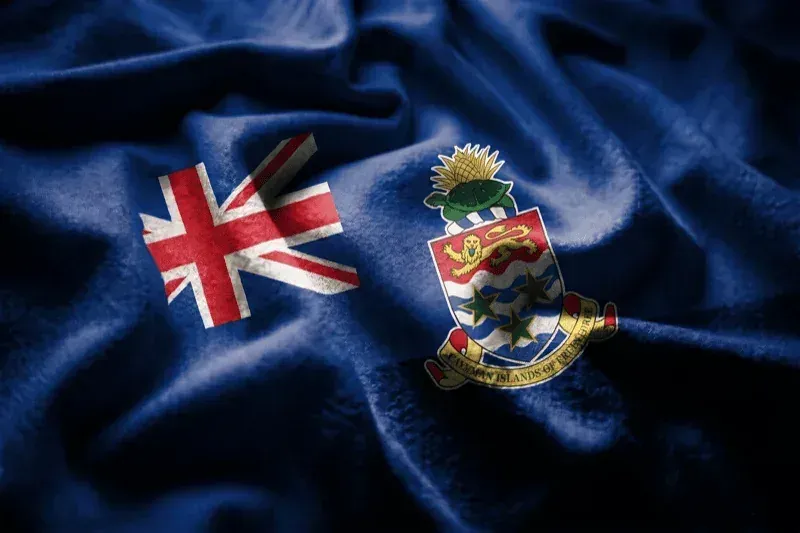
Cayman Islands CIMA license for crypto and securities.
🇰🇾 Cayman Islands — Structured offshore finance

Cayman Islands CIMA license for crypto and securities.

The Cayman Islands Monetary Authority provides well-recognised offshore licences for crypto and forex with established institutional banking relationships.

Timeline
6—8 mo
Crypto (VASP); forex about 3—6 mo
Min. Capital
From USD 1K
Forex share capital; VASP case by case
GSS set-up
From USD 19,800
VASP; forex from USD 21,300
Regulator
CIMA
Cayman Islands Monetary Authority
01 — Is this right for you?

Cayman Islands crypto license: who it is for, and who should look elsewhere.

This jurisdiction rewards operators who treat the application as the start of a supervisory relationship.

A strong fit

When this is the right choice

Institutional crypto funds and digital asset managersThe Cayman Islands host the majority of the world's crypto hedge funds and digital asset vehicles. CIMA's established fund framework — including closed-ended funds, open-ended funds, and segregated portfolio companies — provides the structure institutional investors require.
DeFi protocols and token issuersCayman's legal flexibility for decentralised autonomous organisations (DAOs) and foundation structures, combined with CIMA's VASP framework, makes it the preferred jurisdiction for DeFi governance entities, token foundations, and protocol treasuries.
Exchanges targeting institutional and UHNWI client basesCIMA-registered VASPs carry significant credibility with institutional counterparties, prime brokers, and sophisticated investor networks. For exchanges and OTC desks targeting this client profile, Cayman provides the optimal regulatory address.
A poor fit

When to consider an alternative

Retail-facing operatorsCIMA regulation is not recognised for retail market access in the UK, EU, or North America. Operators targeting mass-market retail clients need to layer a national regulatory licence on top of their Cayman structure.
Projects with a tight budgetBeyond the set-up package, CIMA fees, audits and, for regulated funds, administration add to the running costs. For a first licence on a tight budget, many teams start with a lower-cost jurisdiction.
iGaming and online casino operatorsCayman does not issue online gaming licences. Operators in the gaming sector should look at Anjouan, Curaçao, or MGA for product licensing. Cayman structures are relevant for gaming holding companies and fund vehicles, not operating licences.
02 — Licence categories

What the Cayman Islands crypto license covers.

Choosing the right tier and scope is the most consequential decision in the application.

Virtual Asset Service Provider (VASP)

CIMA's VASP registration covers crypto exchange, custody, and dealing activities. Introduced under the Virtual Asset (Service Providers) Act 2020, it has become one of the most institutional-grade crypto regulatory frameworks globally.

Registered / Licensed Fund

Covers open-ended and closed-ended investment vehicles. Registered funds can launch quickly with minimal CIMA interaction; licensed funds offer a more credible regulatory status for institutional capital raising.

Securities Investment Business Licence

Covers investment management, dealing in securities, and advisory services for the Cayman Islands market and international clients. Used by crypto asset managers and trading entities requiring a formal CIMA licence.

03 — Path to grant

Cayman Islands crypto license timeline, step by step.

Cayman entity and structure

Weeks 1—4

Cayman exempted company or foundation established. Registered office and agent appointed, UBO structure documented, and CIMA pre-consultation conducted for VASP or fund applications.

Application preparation

Months 1—3

Full CIMA application prepared: business plan, AML/CFT programme, risk management framework, governance structure, and fit-and-proper assessments for all principals.

CIMA review

Months 3—7

CIMA reviews application, may request additional documentation or management interviews. VASP applications reviewed against AML/CFT requirements and technology risk framework.

Registration / licence grant

Months 6—8

CIMA registration or licence issued. Annual returns, AML reporting, and ongoing CIMA supervisory obligations commence. Fund vehicles subject to annual audit requirements.

04 — Year-one economics

Cayman Islands crypto license cost and running costs.

Year-one spend is dominated by substance — resident director, office, compliance officer, external audit — not the licence fee itself.

Cost itemAmount
GSS VASP packages
  • Basic — USD 19,800: VASP registration under the minimum regulatory requirements
  • Extended — USD 33,380: VASP registration and a corporate account for operations
  • Full — USD 45,850: full set-up with KYC providers, local substance and accounting
  • Annual fees from USD 6,700 a year (Full package from USD 31,200 a year)
From USD 19,800
GSS forex (securities investment business) packages
  • Basic — USD 21,300: company formation, local substance and licence application
  • Extended — USD 28,000: adds AML/KYC policies, terms and business plan
  • Full — USD 32,500: adds bank account opening and FATCA/CRS reporting
  • Maintenance from USD 6,000 a year from the second year
From USD 21,300
CIMA application / registration feeUSD 3,000 — 25,000
Annual CIMA feeUSD 2,000 — 20,000 (forex: USD 4,878 — 9,756 per licence type)
Fund administrator / compliance (annual, funds)USD 15,000 — 50,000
Year-1 totalPackage plus CIMA fees — confirmed at scoping

Indicative fees from our current proposals; your quote is confirmed after a short scoping call. Government fees are paid separately. CIMA licence fees are paid directly to the regulator, and share capital is injected separately; funds add administration and audit costs.

FAQ

Cayman Islands crypto license questions before filing.

The questions we get on every diagnostic call. If yours isn't here, raise it in the consultation.

Why do most crypto funds domicile in the Cayman Islands?
Cayman offers a combination of features that institutional investors require: no corporation or capital gains tax, a recognised legal framework for complex fund structures, CIMA oversight that satisfies institutional due diligence requirements, and a large ecosystem of specialist fund administrators, lawyers, and auditors.
What is the VASP Act 2020?
The Virtual Asset (Service Providers) Act 2020 is Cayman's dedicated crypto regulatory framework. It requires all businesses providing virtual asset services — exchange, custody, administration — to register or obtain a licence from CIMA. The Act established one of the most comprehensive offshore crypto regulatory frameworks globally.
Is there any tax in the Cayman Islands?
No. The Cayman Islands has no corporation tax, no capital gains tax, no income tax, no withholding tax, and no estate duty. Funds and corporate entities pay no local tax on profits, gains, or distributions.
What is a Cayman foundation?
A Cayman foundation (established under the Foundation Companies Act 2017) is a legal entity without shareholders, used primarily for DAOs, token foundations, and protocol governance structures. It has legal personality, can own assets, enter contracts, and sue — but has no owners in the traditional sense. Widely used in DeFi governance structures.
What are the annual maintenance costs?
GSS annual fees start from USD 6,700 a year for a VASP (from USD 31,200 with the full package) and from USD 6,000 a year for forex from the second year. On top come the annual CIMA fee (for forex, USD 4,878 to 9,756 per licence type), the external audit and, for funds, administrator fees (typically 0.1–0.3% of AUM). We quote the full annual cost at scoping.
Compare

Often weighed against the Cayman Islands.

Operators rarely choose a jurisdiction in isolation. These are the regimes most often weighed against it — or run in parallel.

Ready when you are

Tell us where
you want to
operate.

Forty-five minutes with a partner. Jurisdiction memo within seven days. No retainer required to start.

Or message our Ho Chi Minh City desk
GSS Legal consultation
45 minFirst call with a partner.
No retainer required.