
Tokenomics: Designing Sustainable Token Economics for Crypto Projects
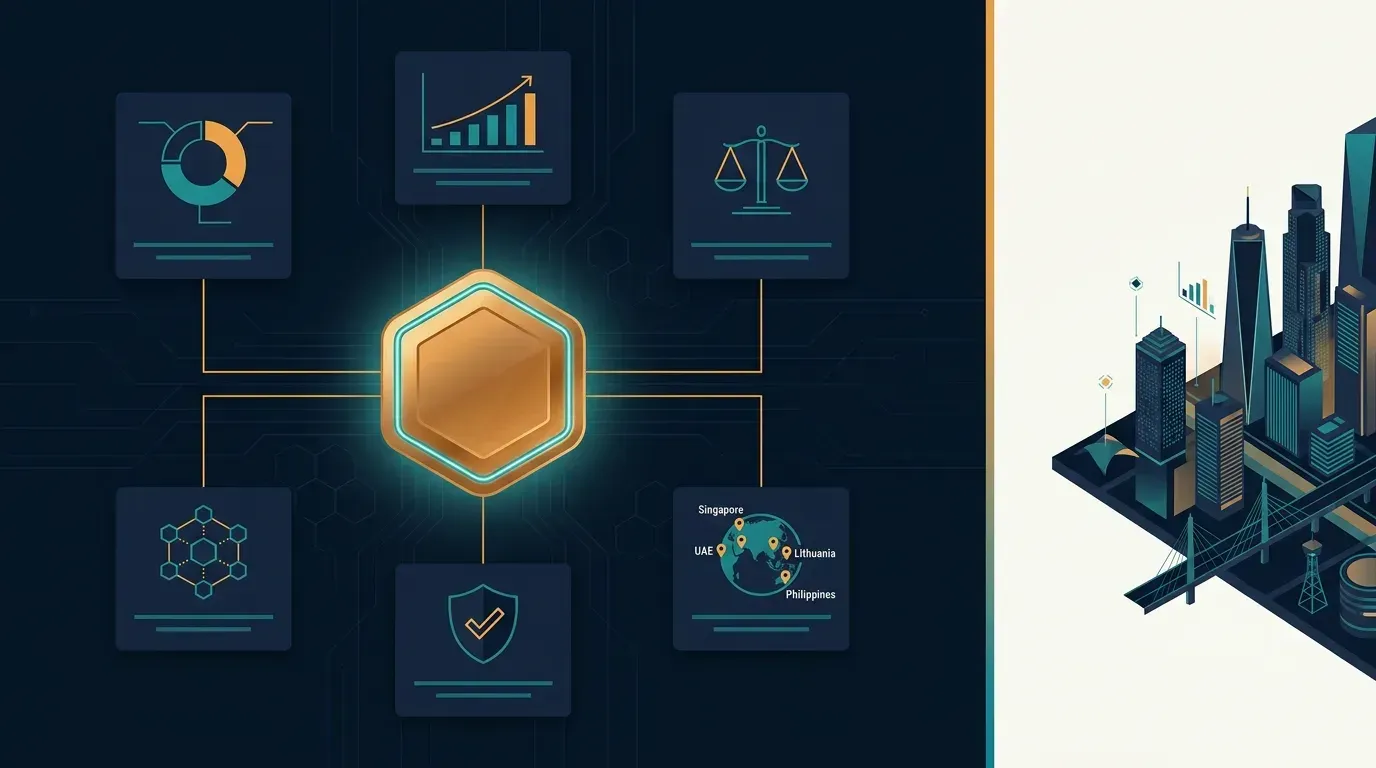
Tokenomics — a portmanteau of token and economics — is the economic system that defines how a token is created, distributed, circulated, and generates value within a blockchain project. This is not merely a technical challenge. It is the foundation that determines whether your project can survive market cycles.
Many crypto projects fail not because of poor technology, but because of arbitrarily designed tokenomics: unfair allocation, overly short vesting schedules, lack of inflation control mechanisms, or — more seriously — violations of legal regulations that the development team failed to identify from the outset.
This article analyses the essential components of a sustainable tokenomics model, from both economic and legal perspectives. The content is designed for founders, legal advisors, and compliance officers — those who need to make decisions based on complete information, not hype.
What is Tokenomics?
Tokenomics encompasses the entire economic mechanism governing a digital token: total supply, distribution method, use cases, token creation and destruction mechanisms, as well as related rights such as governance or rewards. In other words, tokenomics is the project's economic blueprint.
A good tokenomics model creates a self-sustaining loop: the token has value because it is used, users participate because there are benefits, and those benefits are maintained by transparent economic mechanisms. A bad model creates sell pressure immediately after launch, liquidity collapse, and loss of community trust.
Token Classification and Legal Implications
Before designing tokenomics, you need to determine the type of token you are issuing. This is not a technical decision — it is a legal decision with direct consequences for whether the project needs to obtain a licence.
Utility Token
Utility tokens grant access to products or services within the blockchain ecosystem. The SEC classifies tokens using the Howey Test: if buyers expect profits from the efforts of the team, the token may be considered a security even if labelled as utility.
However, this boundary is not fixed. If the development team retains significant control after issuance, or if project materials imply that the token's value will increase due to the team's efforts, regulators may reclassify that token as a security.
Governance Token
Governance tokens allow holders to vote on protocol decisions: upgrades, fund allocation, fee mechanism changes. This type of token is legally complex. Pure governance tokens — without profit-sharing rights or asset claims — may be viewed as governance tools. But if they simultaneously provide economic benefits linked to project revenue, regulators will view them more like shares.
Security Token
Security tokens represent ownership of real assets: company shares, real estate, or other financial instruments. This type is subject to full securities law regulation. Issuing security tokens without registration or valid exemption is a legal violation in most countries.
Transactional & Stablecoins
Transactional tokens (such as ETH when used to pay gas fees) and stablecoins form the backbone of on-chain liquidity. Stablecoins are increasingly under stricter supervision, with many countries requiring specific licences for issuing organisations.
The classification of your token directly affects whether you need to apply for a VASP licence or a CASP licence (under the EU's MiCA framework) before launch.
Core Components of Tokenomics
Below are the factors that must be clearly defined before writing a whitepaper or deploying smart contracts.
Total Supply and Circulating Supply
Total supply is the maximum number of tokens that will ever exist. Circulating supply is the amount actually present in the market. These two figures directly impact market capitalisation and token price. Projects that cannot control the ratio between these two parameters often face strong sell pressure immediately after large unlock events.
Token Allocation
Token allocation should accurately reflect the role of each participating group. There is no rigid formula, but common structures typically include the following groups:
- Team and founders: Typically 15–20%, subject to the longest vesting schedule
- Early investors (Seed/Series A): 10–20%, with clear cliff and vesting
- Ecosystem and development fund: 20–30%, allocated based on milestones
- Community and rewards: 20–30%, creating long-term participation incentives
- Public sale: 5–15%, depending on issuance type
- Reserve fund (Treasury): 5–10%, for long-term risk management
Excessive internal allocation — especially without proportional vesting — is the most common red flag that both investors and regulators notice.
Token Utility
A token needs at least one genuine function within the ecosystem: fee payment, staking, feature access, governance voting, or receiving rewards. A token without specific utility exists only as a speculative tool — this is not only economically weak but also legally risky, as regulators may classify it as a security.
Vesting Schedules: A Project Protection Tool
Vesting is the mechanism of gradually unlocking tokens over time instead of distributing them all at the Token Generation Event (TGE). This is one of the most important tools for protecting token value and maintaining the long-term commitment of participants.
Data from analysing over 200 token launches shows that projects unlocking more than 25% at TGE have a median price drop of 72% in the first year, compared to 38% for projects keeping the unlock ratio below 15%.
Common vesting structures
- Cliff + Linear: No token unlocking during the cliff period (usually 12 months), then linear monthly unlocking thereafter. This is the most common structure, especially for teams and investors.
- Pure Linear: Regular unlocking from the start, with no initial lock-up period. Suitable for communities but less suitable for internal stakeholders.
- Milestone-based: Unlocking tied to specific development milestones. Suitable when you want to align team interests with actual product progress.
Industry standards suggest that teams and founders should adopt a 3–4 year vesting schedule with a 12-month cliff. Seed investors typically have a 6-month cliff and a total 2-year vesting period. Advisors have shorter schedules, but should still have at least 12–24 months of vesting.
Vesting schedules not only protect token value — they are also a transparent signal to the market that the people building the project are committed long-term.
Supply–Demand Models and Inflation Control
One of the most important decisions in tokenomics is choosing an inflationary or deflationary model for your token.
Inflationary model: New tokens are continuously created to incentivise network participation (e.g., staking rewards). This model is suitable when the goal is user growth in the early stages, but it requires tight control mechanisms to prevent inflation from diluting token value over time.
Deflationary model: Tokens are periodically burned to reduce circulating supply, thereby increasing scarcity. Binance has burned over 50 million BNB since launch, using transaction fee revenue to fund this process. This model works well when token usage demand is stable and there is real revenue.
Hybrid model: Many modern projects combine both: additional issuance for rewards while burning a portion of transaction fees. Ethereum combines validator rewards with EIP-1559: the base fee is burned, creating deflationary pressure to counterbalance inflation from rewards.
No model is absolutely correct. The choice depends on the development stage, revenue model, and community expectations.
Decentralized Governance
The governance mechanism determines who has the right to make decisions to change the protocol, allocate funds, or adjust economic parameters. A well-designed governance system distributes power in a way that minimises centralisation risks.
However, governance also brings legal risks. Pure governance tokens — without profit-sharing rights — may be viewed as governance tools. But when such a token simultaneously provides economic benefits from protocol revenue, regulators (especially the SEC) may classify it as an investment instrument. This is why governance token design cannot be separated from legal advice.
Furthermore, the actual level of governance participation is an important measure of a project's decentralisation. Whether a token is considered a security depends on the remaining control held by the team, the allocation structure, and how the token was offered for sale.
Tokenomics and Legal Requirements
Tokenomics design and legal compliance cannot be handled independently. Decisions about token structure directly affect the project's legal obligations.
Token classification and licensing obligations
Depending on the token type and scope of operations, your project may need to apply for a Crypto & VASP licence in one or more jurisdictions. Issuing tokens to third-party users, providing custody services, or operating an exchange can all trigger licensing requirements under the FATF's VASP definition.
Under the EU's MiCA framework, most crypto-asset service providers need to obtain CASP authorisation. This applies even if your main operations are not in Europe, as long as you serve EU users.
AML/KYC and reporting obligations
Crypto projects that issue tokens and accept capital from users need to build AML and compliance policies early on. This includes KYC procedures for token buyers, transaction monitoring, and suspicious activity reporting. Many projects skip this step during the design phase and face legal risks after launch.
Choosing a jurisdiction
The decision of where to establish a legal entity comprehensively affects tax structure, banking access, and licensing speed. Jurisdiction advisory should be conducted in parallel with tokenomics design, not afterwards. Jurisdictions such as Singapore (MAS), UAE (VARA), Lithuania (CASP), or Labuan FSA have different legal frameworks suitable for various token models and market targets.
Furthermore, proper entity formation is a prerequisite for submitting licence applications in any jurisdiction.
Identifying Weak Tokenomics
When evaluating a project — whether for investment or internal review — there are specific signs indicating problematic tokenomics:
- Excessive internal allocation without vesting: If the team or early investors hold a large amount of tokens without a lock-up schedule, this poses a risk of immediate dumping after TGE.
- Vague token utility: A token without a clear function in the ecosystem is merely a speculative tool — high risk both economically and legally.
- Unsustainable reward mechanisms: Unusually high APY (>100%) is often funded by continuous new token issuance, leading to rapid inflation and value collapse.
- Lack of transparency: A whitepaper that does not fully disclose allocation structure, vesting schedules, or the development team's identity is a sign of lacking accountability.
- No legal compliance plan: Projects that do not address legal structure, jurisdiction, or how to handle KYC/AML requirements often face legal troubles later.
Step-by-Step Guide to Designing a Token Model
Designing tokenomics is an iterative process, not a one-time task. Below is a working framework in order of priority:
- Define token purpose — What problem does the token solve? What is its specific utility? Who are the end users and why do they need to hold the token?
- Legal classification of the token — Determine early which type your token falls under according to the regulations of target jurisdictions. This decides the entire subsequent legal structure.
- Choose jurisdiction and establish entity — Decide where to register the legal entity based on token type, target market, and licensing requirements. This step should be done before detailed tokenomics design.
- Define total supply and issuance model — Decide whether to cap total supply, the issuance rate, and inflation control mechanisms (token burns, buybacks, etc.).
- Design allocation structure and vesting — Allocate tokens by role, build vesting schedules for each group, determine the unlock ratio at TGE.
- Build governance mechanisms — Who has the right to make what decisions? What is the voting process? Ensure the governance mechanism does not create centralisation risks.
- Implement AML/KYC — Build compliance policies before starting to sell tokens. This is not a final step but the legal foundation of the entire issuance process.
- Post-launch monitoring and adjustment — Tokenomics needs continuous monitoring. The crypto market changes rapidly; the model needs flexibility within the scope allowed by smart contracts and community governance.
Conclusion
Tokenomics is not an appendix in the whitepaper — it is the core that determines whether your crypto project can survive. A sustainable token model must simultaneously meet three criteria: economic (supply-demand balance, reasonable vesting, genuine utility), governance (substantive decentralisation of power), and legal (correct token classification, full licensing, AML/KYC compliance).
Many projects fail because they ignore this legal dimension until it is too late. Tokenomics design and building a compliance framework need to happen in parallel, not sequentially.
If you are in the early stages of building a crypto project — or need to review your current token structure — ensure you have a legal team proficient in both aspects: token economics and jurisdictional regulations.
Need support with the legal structure for your crypto project?
GSS Legal (by Gofaizen & Sherle) has supported over 800 licence applications across 50+ jurisdictions, including VASP, CASP (MiCA), UAE VARA, and Singapore MAS. We advise from token classification, jurisdiction selection, entity formation, to building AML/Compliance programmes — all in a continuous process.
Book a consultation