
What Is an MSB? A Guide to Money Service Businesses for Fintech Companies
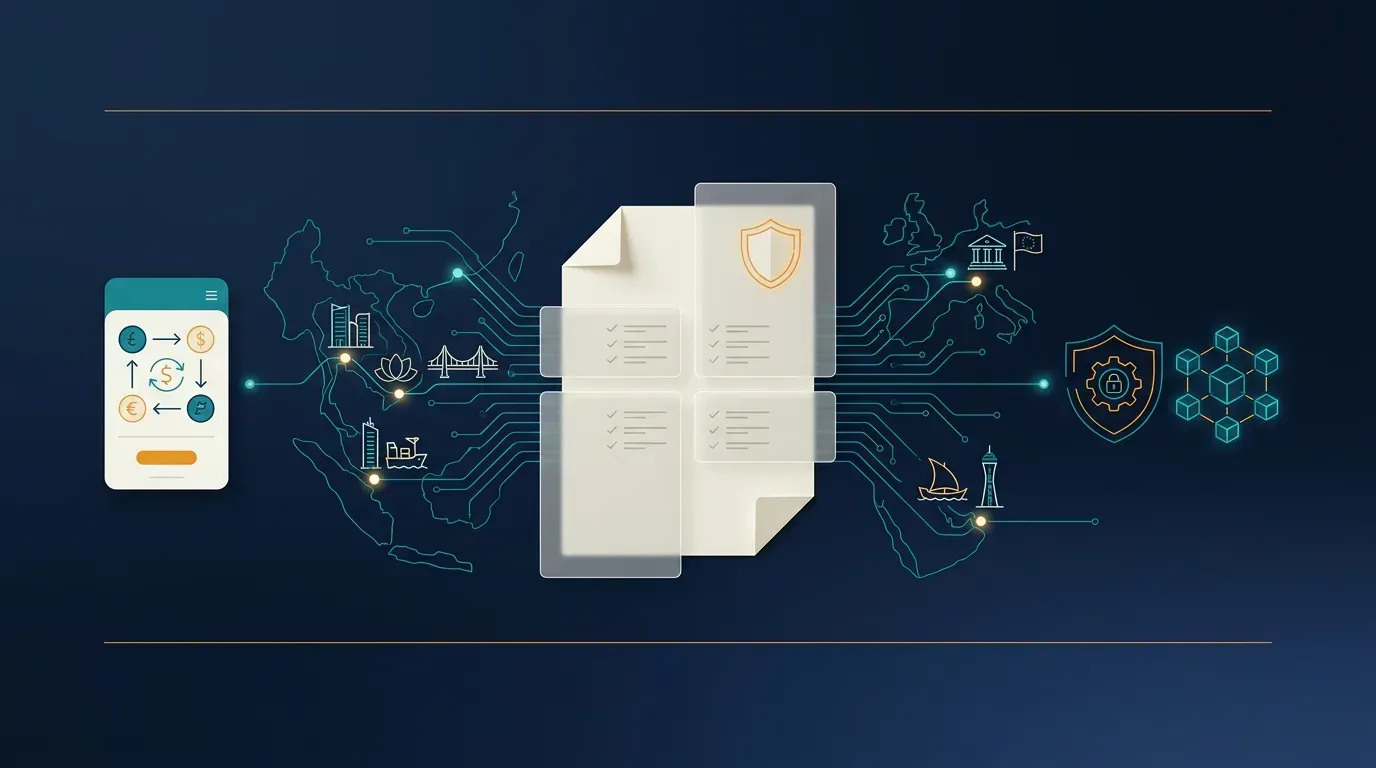
When a fintech company begins processing monetary transactions—whether cross-border remittances, foreign exchange, or digital wallets—the question of legal licensing arises early. One concept that most founders and compliance officers must understand is the MSB (Money Service Business).
An MSB is a legal category widely applied in the United States and Canada. It identifies businesses providing financial services outside the traditional banking system, requiring them to register, establish AML programs, and adhere to specific reporting obligations.
This article explains what an MSB is, which business models fall under its scope, the registration process in each market, and the legal risks of non-compliance.
What is an MSB?
Money Service Business (MSB) is the legal term for organizations providing financial services outside the traditional banking channel. In the US, MSBs are defined under the Bank Secrecy Act (BSA) and supervised by FinCEN (Financial Crimes Enforcement Network). In Canada, the equivalent framework is regulated by FINTRAC under the PCMLTFA.
The key point to understand immediately: MSB registration is not a comprehensive operating license. It is a federal registration confirming that a business falls under AML jurisdiction and initiating related compliance obligations. In the US, to legally operate money transmission in each state, a business also needs a Money Transmitter License (MTL) at the state level.
In short, an MSB registration is a necessary but insufficient condition for operating a money transfer or payment platform in the North American market.
Activities Covered by MSB
The scope of MSB is often broader than many founders anticipate. The following activities, when performed by a non-bank organization, typically trigger MSB registration obligations:
- Domestic and international money transfers
- Foreign exchange and forex trading
- Digital payment and transaction processing
- Issuing and selling money orders or traveler's checks
- Check cashing services
- Prepaid cards and stored-value products
- Crypto exchanges and on/off-ramp services (converting fiat to crypto and vice versa)
- Custodial digital wallets with money transfer functionality
FinCEN clarified in 2013 and reaffirmed in 2019 that virtual currency exchanges and providers of custodial digital asset services fall under the MSB category. This means if your platform converts fiat to crypto—or vice versa—you likely need to register as an MSB.
Entities Not Covered by MSB
Banks, credit unions, and broker-dealers are already regulated under separate frameworks with equivalent or higher AML obligations. If your business holds a banking license or is registered with the SEC or FINRA, MSB registration obligations typically do not apply.
Who Needs to Register as an MSB?
The threshold for triggering MSB obligations in the US is low: any organization conducting transactions over $1,000 per person per day in one or more MSB categories must register with FinCEN. Money transmission services have no minimum transaction threshold—regardless of scale.
In Canada, FINTRAC sets no minimum threshold for most MSB activities. Even businesses with small transaction volumes must register before commencing operations.
Business models that typically require MSB registration include:
- Fintech startups offering payment or money transfer features
- Crypto exchanges (centralized and decentralized with custody)
- Neobanks and challenger banks with money movement capabilities
- Marketplace platforms disbursing funds to merchants or sellers
- Payroll and disbursement services for the gig economy
- International remittance services
- BNPL (Buy Now Pay Later) and digital lending platforms with integrated transfers
If you are building any of the above models and targeting the US or Canadian markets, determining your MSB obligations must be done before product launch—not after.
MSB in the US: FinCEN and State MTLs
The US operates a two-tier legal system for MSBs. The federal tier is FinCEN registration—mandatory and applicable nationwide. The state tier is the Money Transmitter License (MTL)—issued individually by each state, with varying requirements.
A common misconception among businesses: FinCEN registration does not automatically allow you to operate in any state. This is a frequent and costly mistake. To serve customers in a specific state, a business needs the MTL for that state.
Registration Deadlines in the US
- FinCEN Registration: within 180 days of starting MSB operations
- State-level MTL: most states require licensing before commencing operations in that jurisdiction
- FinCEN Renewal: every two years
MTL Requirements in Key States
| State | Surety Bond | Minimum Capital | Notes |
|---|---|---|---|
| New York | USD 500,000 – 1M+ | USD 500,000+ | Crypto requires additional BitLicense |
| California | USD 250,000 – 7M+ | Depends on transaction volume | Filed via NMLS |
| Texas | USD 100,000 – 300,000 | USD 25,000 | Filed via NMLS |
| Florida | USD 100,000 – 2M+ | USD 100,000 net worth | Filed via NMLS |
| Montana / South Carolina | Not required | Not required | Currently no state-level MTL requirement |
MTL processing times typically range from 3 to 18 months depending on the state. To deploy across all 50 states, a business should prepare for 12 to 24 months and a total budget of $50,000 to $200,000 or more, depending on the number of target states.
MSB in Canada: FINTRAC
The MSB legal framework in Canada is significantly simpler than in the US. FINTRAC manages federal MSB registration—a single registration valid nationwide, with no need for individual provincial registrations.
FINTRAC registration is completely free and has no minimum capital requirement. However, it is a mandatory condition that must be completed before commencing any MSB activity—there is no grace period.
MSB and FMSB: Two Paths in Canada
Canada clearly distinguishes between two registration types:
- MSB (domestic): For companies incorporated in Canada or with a physical presence there.
- FMSB (Foreign Money Services Business): For foreign companies providing MSB services to Canadian customers from outside the country. No Canadian office is required, but registration with FINTRAC is still mandatory.
This is one of the legal nuances international fintechs often overlook when expanding into Canada. Simply having Canadian customers—even without a local office—places you under FINTRAC's jurisdiction. Serving Canadian users without registering as an FMSB can lead to enforcement actions, even if all your operations occur abroad.
AML and Compliance Requirements
MSB registration—whether in the US or Canada—comes with the obligation to build an AML (Anti-Money Laundering) program. This is not a recommendation; it is a mandatory legal requirement.
A compliant AML program must include the following components:
- Documented AML/CTF policies and procedures, tailored to the specific business model
- A clearly designated Compliance Officer (BSA Officer) with sufficient authority and resources
- KYC (Know Your Customer) procedures to verify customer identities
- A transaction monitoring system to detect unusual activity
- Procedures for filing SARs (Suspicious Activity Reports) and CTRs (Currency Transaction Reports)
- Regular employee training programs
- Independent audits of the AML program's effectiveness, at least every two years
In Canada, FINTRAC also requires businesses to retain transaction records and customer identification documents for a minimum of 5 years. For virtual currency transactions of CAD 1,000 or more, KYC and record-keeping obligations apply similarly to cash transactions.
It is important to note that registering with FinCEN without a fully operational AML infrastructure creates immediate legal risk. Registration is not a temporary holding pattern—it signals to regulators that the business is ready to comply.
Consequences of Not Registering
Operating as an unregistered MSB in the US can lead to civil penalties of up to $250,000 per violation under the BSA. In severe cases, criminal prosecution can result in imprisonment for up to 5 years. Beyond direct penalties, regulators may also order the suspension of operations and asset forfeiture.
Secondary consequences are often equally severe: banking partners may terminate account relationships, investors may withdraw from funding rounds, and payment partners may refuse integration. For a fintech startup in its growth phase, these consequences can be decisive.
It is worth noting: late registration does not erase past violations. If a business operated MSB services before completing registration, that period still constitutes a legal violation subject to enforcement.
MSB Registration Process
Below are the basic steps in the MSB registration process for the US and Canada:
- Classify Business Activities – Determine which MSB categories your product model falls into. Many platforms trigger more than one category simultaneously (e.g., both money transmission and foreign exchange).
- Register with FinCEN (US) – File via the BSA E-Filing system. You must designate a BSA Officer, provide corporate formation documents, and disclose ownership structures. Processing time is typically 1 to 4 weeks.
- Apply for State-Level MTLs (US) – Prioritize states with the largest customer bases. Most states use the NMLS system. Each state requires a surety bond, minimum net worth, background checks, and separate financial reports.
- Register with FINTRAC (Canada) – Complete via the FINTRAC online portal before commencing operations. There is no registration fee and no minimum capital requirement. Processing time is typically 1 to 3 months.
- Build an AML Program – Establish all necessary policies, procedures, and transaction monitoring systems appropriate for your scale and business model.
- Maintain Ongoing Compliance – Periodic renewals, updating information when business activities or ownership structures change, and preparing for regular regulatory audits.
MSB and Other Financial Licenses
MSB is a legal category specific to North America. In other markets, equivalent frameworks have different names and regulators:
- European Union: EMI (Electronic Money Institution) or PI (Payment Institution) licenses under PSD2; CASP/VASP licenses under MiCA regulations for digital assets. Hubs like Lithuania and Estonia are often chosen for their relatively clear processes.
- UAE / Gulf: VASP registration with VARA (Dubai) or ADGM/FSRA; PSP licenses with CBUAE for payment services.
- Singapore: Major Payment Institution (MPI) or Standard Payment Institution (SPI) licenses under the Payment Services Act, issued by MAS.
- Philippines / Labuan: VASP licenses from the BSP or structures via Labuan FSA for international financial businesses.
For fintechs building an international expansion strategy, choosing the jurisdiction that best fits the business model is the first step—not picking a license and then looking for a market. The reverse approach often leads to higher compliance costs and longer licensing processes.
If you are weighing MSB in the US/Canada against other options like EMI/PSP licenses, VASP/CASP in Europe, or Forex/FX licenses for your target market, jurisdiction analysis is essential for making the right decision. Learn more about GSS Legal's jurisdiction advisory services.
Summary
MSB (Money Service Business) is a mandatory legal category for most fintech companies operating in the US and Canadian markets. Its scope is broader than many founders anticipate—covering everything from digital wallets and crypto exchanges to remittance and payroll platforms.
MSB registration is not the end of the compliance journey. It is the beginning of a series of ongoing obligations: AML programs, periodic reporting, state-level MTLs in the US, and updating information when business changes occur.
For businesses expanding into multiple markets, the question is not just "MSB or not," but also "which jurisdiction best fits our model and growth trajectory over the next 3 to 5 years?"
Need Advice on Fintech or MSB Licensing?
GSS Legal supports fintech, crypto, and payment businesses in identifying the right jurisdiction, preparing licensing applications, and maintaining ongoing compliance—from Singapore and Ho Chi Minh City to EU, Gulf, and offshore markets. With over 800 licenses completed across 50+ jurisdictions, we provide advice based on real-world experience, not theory.
Book a Free Consultation