
Hong Kong Stablecoin Sandbox and Licence Application: Which Businesses Qualify and What Documents Are Required
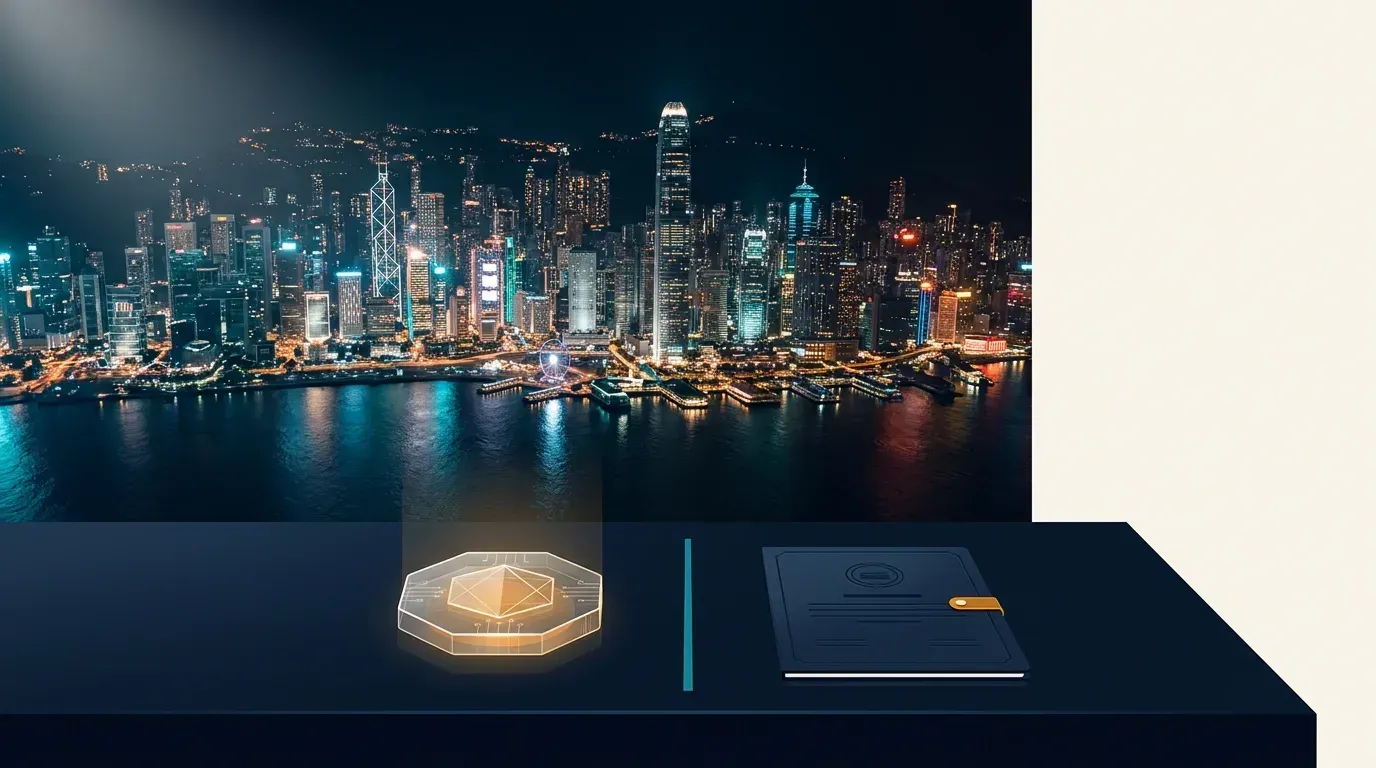
On 1 August 2025, Hong Kong’s Stablecoins Ordinance came into force. Since then, any entity issuing fiat-referenced stablecoins within Hong Kong, or issuing Hong Kong dollar-pegged stablecoins anywhere in the world, must hold a licence issued by the Hong Kong Monetary Authority (HKMA).
Market interest rose quickly after the framework took effect. According to the HKMA, 77 institutions had expressed an intention to apply by 31 August 2025. The Authority has repeatedly stated that only a small number of licences will be granted initially, with approval standards approaching those applied to banks.
For businesses considering entry into this market, two practical questions stand out: Do we meet the eligibility criteria? What documents must we prepare? This article unpacks the core requirements for Hong Kong’s stablecoin sandbox and full licence application, offering guidance for founders, legal counsel and compliance leads.
1. Regulatory background: the Stablecoins Ordinance and the sandbox
The Stablecoins Ordinance was passed by the Legislative Council on 21 May 2025 and came into force on 1 August 2025. The Ordinance regulates fiat-referenced stablecoins (FRS), i.e. digital tokens that maintain a stable value by fully referencing one or more official currencies. Algorithmic stablecoins that rely solely on algorithms to maintain value, and stablecoins collateralised by crypto assets or commodities, fall outside the scope of the Ordinance.
It is important to note that the Ordinance has broad jurisdictional reach. Any entity issuing fiat-referenced stablecoins within Hong Kong, or issuing stablecoins pegged to the Hong Kong dollar anywhere in the world, must hold an HKMA licence, regardless of where the issuer is incorporated.
Prior to the full licensing regime taking effect, the HKMA launched a “sandbox” arrangement for stablecoin issuers in March 2024. The aim was to allow institutions intending to issue stablecoins in Hong Kong to test their business models in a controlled environment and engage in two-way dialogue with regulators on proposed regulatory requirements.
2. Sandbox versus full licence: key differences
When first encountering Hong Kong’s stablecoin regulatory framework, many businesses confuse “entering the sandbox” with “obtaining a licence”. Clarifying the distinction helps determine one’s current stage and the appropriate next steps.
| Dimension | Sandbox phase | Full licence |
|---|---|---|
| Nature | Controlled testing mechanism, not regulatory approval | Statutory authorisation to operate lawfully |
| May conduct public business | No (may not handle public funds or raise capital publicly) | Yes (subject to ongoing compliance) |
| Equivalent to holding a licence | No (sandbox participants must still separately submit a licence application) | Yes |
| Primary value | Establish dialogue with regulators and test feasibility | Obtain lawful issuance authority and commence public operations |
The HKMA announced its first batch of sandbox participants in July 2024, including JD.com’s JINGDONG Coinlink Technology Hong Kong Limited, RD InnoTech Limited, and a consortium comprising Standard Chartered Bank (Hong Kong), Animoca Brands and Hong Kong Telecom (HKT), later consolidated as Anchorpoint Financial. These three groups engaged with regulators in the sandbox for over a year, with Anchorpoint Financial becoming one of the first licensees in April 2026.
Sandbox participation itself does not constitute HKMA endorsement nor does it confer licence eligibility. Regulators have made clear that sandbox participants must still submit a separate licence application under the formal licensing process once the regulatory regime is fully implemented.
3. Which businesses are suitable applicants
The HKMA positions stablecoin issuers as “on-chain financial infrastructure”, with supervisory standards on par with banks and payment institutions. This positioning means that not every business wishing to enter the stablecoin market meets the baseline conditions for a direct licence application.
3.1 Corporate eligibility requirements
Under the Stablecoins Ordinance, only two types of entities may currently apply for a licence:
- A company incorporated in Hong Kong; or
- An authorised institution incorporated outside Hong Kong, including banks, restricted licence companies and deposit-taking companies (which must comply with the relevant provisions of the Banking Ordinance).
This means that overseas enterprises that are not such banking-type financial institutions must establish a subsidiary in Hong Kong before applying. Merely setting up a shell company or nominal entity in Hong Kong does not satisfy the requirement; the HKMA has clearly stated that entities that established structures without substantive operations before 1 August 2025 do not qualify for transitional arrangements.
3.2 Most suitable applicant profiles
Considering the HKMA’s supervisory orientation and the backgrounds of the first licensed institutions, the following types of businesses have a relatively higher likelihood of success:
- Financial institutions with banking backgrounds: The HKMA explicitly favours applicants familiar with the Basel framework; banking institutions naturally possess advantages in risk management systems, AML/CFT compliance and capital adequacy.
- Payment and cross-border settlement platforms: The ability to provide concrete, implementable stablecoin use cases (especially for cross-border payments and settlements) is a significant plus in the HKMA’s assessment. Conceptual visions are insufficient for approval.
- Technology or financial groups with integrated ecosystems: Existing user bases, compliance experience and distribution channels can support compliant circulation of stablecoins within a closed ecosystem at an early stage.
- Global issuers seeking to enter the Asian market with HKD-pegged stablecoins: If the business model focuses on HKD-pegged assets, a Hong Kong licence is the only lawful route and serves as a moat for building market trust.
Conversely, the following types of businesses should not rush to submit applications at this stage: those whose business models remain at the concept stage with no concrete use cases; those lacking substantive local operations and senior management teams in Hong Kong; those with insufficient capital strength to meet reserve asset requirements; and start-ups whose AML/CFT compliance frameworks are not yet established.
4. Core eligibility thresholds for a licence
The Stablecoins Ordinance and the HKMA’s Licensing Regime Summary Note establish a series of ongoing minimum compliance standards. Applicants must not only meet these requirements at the time of application but also demonstrate the ability to maintain them continuously after licensing.
4.1 Financial resources
Applicants must possess sufficient financial resources and liquid assets to fulfil stablecoin redemption obligations. Specific requirements include:
- Paid-up share capital of no less than HK$25 million (or an equivalent amount in freely convertible currency, or equivalent financial resources approved by the HKMA), which must be maintained on an ongoing basis;
- Holding sufficient liquid net assets to meet due obligations. The guidance does not prescribe a fixed amount, but these assets must be funded by equity (not loans, guarantees or other borrowings); the HKMA considers historical and projected operating expenses when assessing sufficiency.
If the licensee is an authorised institution, the above two requirements do not apply; instead, it must comply with the Banking Ordinance (Cap. 155) and related guidelines. Furthermore, under section 17 of the Ordinance, the HKMA may impose conditions on the licence requiring the licensee to maintain financial resources above the minimum standards.
4.2 Reserve asset management
Stablecoins must be backed 1:1 by high-quality, highly liquid financial assets. Reserve assets must be held by a qualified custodian — either a licensed bank or another asset custodian under arrangements acceptable to the HKMA — and subject to independent assurance. Eligible reserve assets include cash, bank deposits with maturities not exceeding three months, negotiable debt securities issued or guaranteed by public-sector issuers such as governments or central banks with remaining maturities not exceeding one year (corporate bonds are not eligible), and cash receivables arising from overnight reverse repurchase agreements collateralised by such securities.
Regarding foreign exchange, if the denomination currency of the reserve assets differs from the stablecoin’s peg currency (for example, USD assets backing an HKD stablecoin), prior written approval from the HKMA is required, and such approval is granted only in exceptional circumstances.
4.3 Issuance, redemption and distribution
Licensed issuers must meet the following requirements at the operational level:
- Issuance phase: Stablecoins may only be issued to onboarded customers who have undergone rigorous AML/CFT identity verification;
- Redemption phase: Unless otherwise approved by the HKMA, valid redemption requests must be processed within one business day after receipt, and no unreasonable fees or excessively onerous conditions may be imposed;
- Distribution phase: Due consideration must be given to the regulatory rules of the distribution jurisdiction; licensed stablecoins must not be distributed in jurisdictions that prohibit stablecoin transactions.
4.4 Senior management and local substantive operations
The applicant’s chief executive, directors, stablecoin managers and controllers must all be “fit and proper” persons. Where the licensee is not an authorised institution, the appointment of the chief executive and directors requires prior HKMA consent; where the licensee is an authorised institution, the appointment of stablecoin managers requires prior HKMA consent. Generally, independent non-executive directors should constitute more than one-third of the board (this requirement does not apply to authorised institutions). Senior executives and key personnel are typically required to be based in Hong Kong.
4.5 Risk management and AML/CFT
Applicants must establish robust risk management policies and procedures covering credit risk, liquidity risk, market risk, technology risk, operational risk and reputational risk. The HKMA has repeatedly emphasised that stablecoin licences are subject to AML/CFT supervisory standards on par with those for banks and e-wallets, making this one of the most challenging capabilities to establish among the eligibility thresholds.
To learn how to build an AML compliance framework that meets HKMA expectations, see our AML and compliance services.
5. Documents required for the application
In Annex B of the Licensing Regime Summary Note, the HKMA lists the 23 documents required for submission. The application form is not publicly available and must be requested from the HKMA licensing team.
According to the HKMA’s guidance, application materials can be broadly categorised as follows:
- Corporate qualification documents: Certificate of incorporation, articles of association, ownership structure chart, controller information;
- Business plan and financial projections: Stablecoin issuance proposal, use-case description, three-year financial projections;
- Policies and procedures: Risk management policy, AML/CFT policies and procedures, IT and cybersecurity policy, redemption policy, reserve asset management policy;
- Financial soundness documents: Latest audited financial statements, proof of liquidity and capital;
- Compliance readiness documents: Independent assessment report (demonstrating the applicant’s overall compliance with applicable regulatory requirements);
- Personnel qualification documents: Application forms and fit-and-proper declarations for the chief executive, directors and stablecoin managers;
- Reserve asset arrangement documents: Proof of arrangements with Hong Kong licensed banks (custody) and fund management companies (if applicable).
The HKMA may request additional information at any time during the review process. Processing times depend on several factors, including the complexity of the business model, the adequacy and quality of the submitted documents, and the applicant’s responsiveness to follow-up queries.
In addition, applicants must submit an independent assessment report, prepared by an external professional body to evaluate the applicant’s overall compliance status. This is an additional requirement beyond typical financial licence applications.
6. Application process and key milestones
The application process for a Hong Kong stablecoin licence consists of two stages: the pre-application dialogue stage and the formal application stage. Both stages must be initiated by the applicant contacting the HKMA.
Step 1: Express interest in applying
Applicants must first express their interest to the HKMA licensing team (stablecoin_licensing@hkma.gov.hk). The HKMA will engage with the applicant to understand their background and business model, and ensure the applicant fully understands the licensing procedure and minimum standards.
Step 2: Pre-application dialogue and preparation
The HKMA established a dedicated pre-application dialogue period at the outset of the regime, encouraging prospective applicants to engage in-depth with regulators before submitting formal applications. The HKMA has made clear that pre-application dialogue is not a screening process, but applicants should prepare concrete, feasible stablecoin issuance proposals at this stage, rather than remaining at the conceptual level.
Step 3: Submit formal application
The applicant submits the complete application materials (including the 23-item document list and application form) to the HKMA. The HKMA will conduct a substantive review, with the processing timeline depending on document quality and business complexity.
Step 4: Approval and licensing
The HKMA has stated that licensing is an ongoing process with no fixed processing timeline commitment. The first licences were issued on 10 April 2026, awarded to The Hongkong and Shanghai Banking Corporation Limited (HSBC, FRS02) and Anchorpoint Financial (FRS01; a joint venture of Standard Chartered, Animoca Brands and HKT). The HKMA indicated it would continue engaging with remaining applicants and prospective applicants, but maintains an “open but prudent” stance on further approvals; licensing thresholds will remain high, and even if additional licences are granted, the total number will be very limited.
7. Practical tips to improve approval odds
Based on the HKMA’s publicly stated supervisory stance and the circumstances of the first licensed institutions, the following points are critical to improving the likelihood of approval.
Define concrete stablecoin use cases
HKMA Chief Executive Eddie Yue has repeatedly emphasised that applicants must provide specific, clear stablecoin use cases, rather than speaking in generalities about cross-border payment efficiency or Web3 development visions. In his comments in July 2025, he noted that many proposals encountered remained at the conceptual level, lacking feasible detailed plans and implementation roadmaps. When announcing the first licensing results, the HKMA also stated that the two licensed institutions had, in addition to risk management capabilities, presented credible use cases and development plans.
Secure key personnel early
The pool of candidates with stablecoin industry experience who are recognised by the HKMA is limited, and some suitable candidates may already have received offers from other institutions. Applicants should confirm candidates for the chief executive, directors and stablecoin manager positions as early as possible, and inform the HKMA of this information during the pre-application dialogue stage.
Seek support from home-jurisdiction regulators
The Licensing Regime Summary Note states that if the applicant’s parent company concurrently operates regulated digital asset or other financial services business in its place of incorporation, the HKMA may contact the local regulator and consider its views on the parent’s financial soundness and overall internal control environment. Therefore, the HKMA advises applicants to facilitate their parent company’s consultation with the home-jurisdiction regulator before submitting the application, to avoid delays in approval. This does not require obtaining explicit consent from the local regulator, but completing the dialogue in advance can reduce back-and-forth queries during the approval process.
Apply as a consortium
Anchorpoint Financial, one of the first licensees, was formed by a bank (Standard Chartered), a Web3 platform (Animoca Brands) and a telecom operator (HKT); the HKMA also noted when announcing the licensing that this joint-venture structure combined telecom, payment and digital asset enterprises, creating synergies for regulated stablecoins. This combination comprehensively covers the three dimensions of reserve asset management, distribution channels and technical infrastructure. This model suggests that applying jointly with a bank (reserve custody), a licensed fund management company (asset management) and an institution with ecosystem distribution capabilities can help demonstrate multi-dimensional synergies in the application materials.
To learn how to structure a corporate entity that meets regulatory requirements, see our corporate formation services, or explore our experience in the crypto / VASP licence domain.
Conclusion
Hong Kong’s stablecoin licensing regime is benchmarked against banking-level supervisory standards, with high thresholds spanning capital requirements, reserve management and AML/CFT compliance. The HKMA’s initial licensing approach is prudent, and the limited number of licences means each licence carries substantial market value.
For decision-makers, the key lies in objectively assessing their own compliance readiness — including capital strength, local structure, key personnel and business use cases — before deciding whether and when to submit an application. Rushing to submit incomplete materials not only wastes resources but may also affect subsequent communication with the HKMA.
As a key hub for digital asset regulation in Asia, Hong Kong stablecoin licences hold long-term strategic value in cross-border payments, tokenised assets and on-chain finance. To learn more about crypto / VASP licences, bank account opening and EMI / PSP services, or jurisdiction advisory in Hong Kong and other jurisdictions, please contact our team.
Book a consultation with us
GSS Legal (Gofaizen & Sherle) has delivered over 800 licences across more than 50 jurisdictions worldwide, covering crypto assets, virtual asset service providers, forex and iGaming. Our Asia teams are based in Singapore and Ho Chi Minh City, with deep familiarity of regulatory practices in Hong Kong and the wider Asia-Pacific region.
For a preliminary assessment of Hong Kong stablecoin licence applications, sandbox eligibility or overall compliance architecture, please book a consultation with our team.