
E-Wallets and PSP/EMI Business Models in Southeast Asia: A Practical Licensing Guide
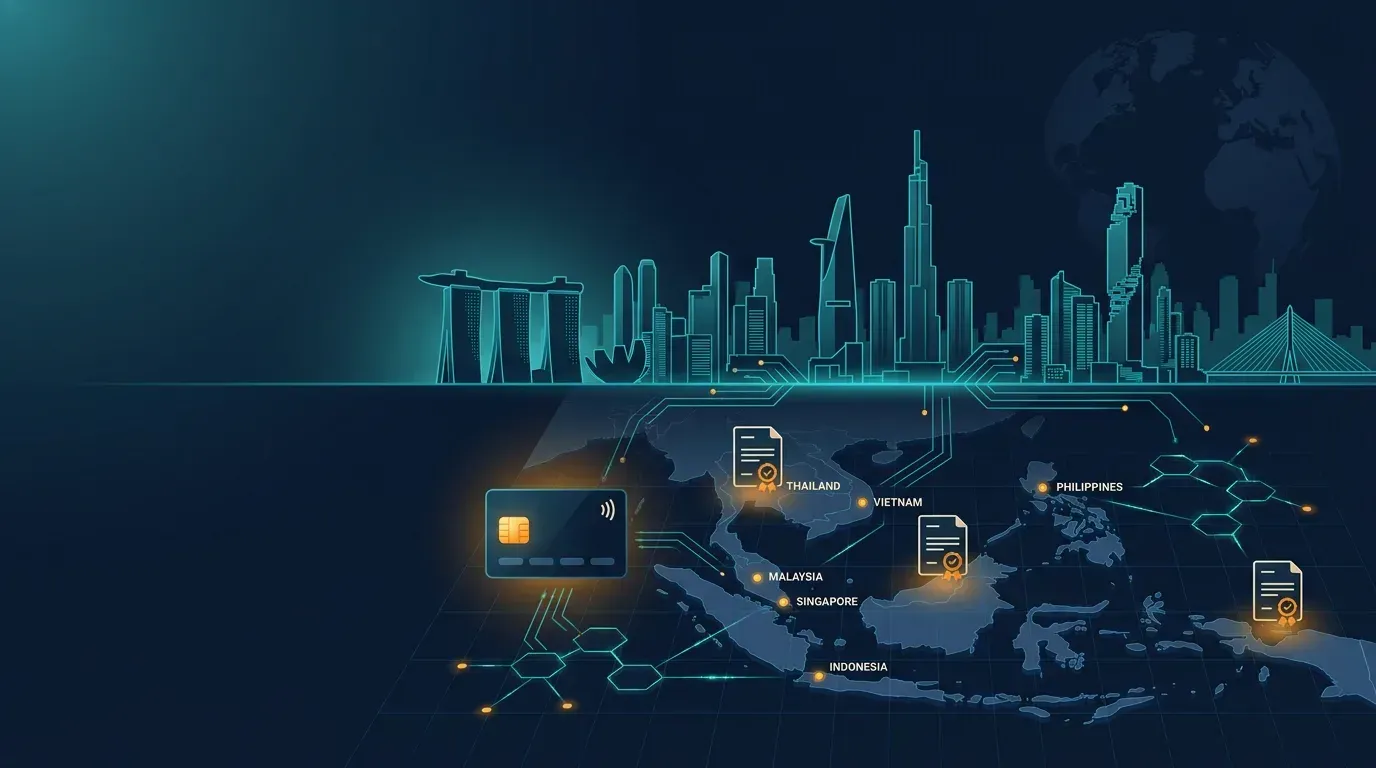
Southeast Asia is one of the fastest-growing digital payment markets in the world. Hundreds of millions of users transact daily through e-wallets, QR systems, and real-time transfers — from GCash in the Philippines, GoPay and OVO in Indonesia, to MoMo in Vietnam and Touch 'n Go in Malaysia. This infrastructure does not run itself. Behind every e-wallet or payment gateway is a licensed entity: an Electronic Money Institution (EMI) or a Payment Service Provider (PSP).
For businesses looking to enter this market, the core question is not just “should we apply for a license” but: which type of license, in which country, and under which regulatory framework? The two models — EMI and PSP — have different scopes of activity, different capital requirements, and suit different business strategies.
This article clearly analyzes the differences between EMI and PSP, provides an overview of the regulatory frameworks in six key markets in the region — Singapore, Philippines, Indonesia, Thailand, Malaysia, and Vietnam — and guides you on how to choose the model that fits your business goals.
E-Wallets & Licensing PSP / EMI
Practical legal overview across 6 key markets: Singapore · Philippines · Indonesia · Thailand · Malaysia · Vietnam
EMI vs PSP — Two Core Models
Institution
- ✓ Issue e-wallets, hold balances
- ✓ Issue prepaid cards
- ✓ Open payment accounts
- ✓ Process payments & transfers
Provider
-
Quick Comparison TableCriteriaEMIPSPHold Customer Funds✓ Yes✗ NoIssue E-Money✓ Yes✗ NoMinimum Capital RequirementHigherLowerApplication Processing TimeLongerShorterAML/KYC SupervisionHighMedium → High
Licensing by Country
(PSA — MAS)
(BSP)
(BI + OJK)
(PSA 2017 — BOT)
/ PSO Labuan
(SBV)
6 Steps from Jurisdiction Selection to Operations
Analysis
Formation
Documentation
with Regulators
& Integrate
Compliance
5 Things to Remember
Planning to apply for a PSP or EMI license?
Direct consultation: jurisdiction selection, entity structuring, and application processes across 6 Southeast Asian markets.
The E-Wallet Market in Southeast Asia
Southeast Asia is not a single payment market. It consists of six distinct markets, each with its own domestic payment systems, e-wallet ecosystems, and unique consumer habits. The only commonality is a clear shift: government-built real-time payment systems and mobile wallets are replacing bank cards as the primary payment method.
The region's digital economy has reached a new scale. According to Bain's e-Conomy SEA 2025 report, Southeast Asia's digital economy grew from $40 billion in GMV a decade ago to over $300 billion in 2025, with more than 60% of transactions conducted digitally. The region's digital payment market has surpassed the $1 trillion total transaction value mark.
Fragmentation is the defining feature of this market. QRIS in Indonesia, PromptPay in Thailand, VietQR in Vietnam, and DuitNow in Malaysia are separate domestic QR infrastructures, each with different regulations and supervisory bodies. To operate legally in any market, businesses need a license that complies with local laws — there is no “regional license” that exists.
An important signal for international wallet issuers and PSPs: cross-border QR interoperability is expanding. Indonesia, Thailand, Singapore, Malaysia, and the Philippines have connected their domestic QR systems, allowing e-wallet users to make cross-border payments. This creates opportunities but also increases multi-jurisdictional legal compliance requirements.
What Are PSP and EMI? Distinguishing Two Business Models
EMI (Electronic Money Institution) is an entity licensed to issue electronic money, open e-wallets, hold customer funds, and provide payment accounts. The EMI model suits businesses that want to control the entire lifecycle of money: from deposit into the wallet to payment or withdrawal. This is the model used by GCash, MoMo, GoPay, and most major e-wallets in the region.
PSP (Payment Service Provider) is an entity permitted to process payments, transfer funds, and acquire merchants without holding customer funds in internal accounts for long periods. A PSP acts as a technical intermediary — connecting buyers, sellers, and banks — but does not issue electronic money or open accounts for end-users.
The practical boundary between the two models lies in one question: does your business hold customer funds? If yes — or if you issue wallets, prepaid cards, or payment accounts — you need an EMI license. If you only process transactions as a technical intermediary without holding funds, the PSP model may be more suitable.
Comparison Table: PSP vs. EMI
| Criteria | EMI | PSP |
|---|---|---|
| Hold Customer Funds | Yes | No (or temporarily, very short duration) |
| Issue E-Money | Yes | No |
| Open Wallet / Payment Account | Yes | Usually No |
| Issue Prepaid Cards | Yes (depending on jurisdiction) | No |
| Process Payments / Transfers | Yes | Yes |
| Minimum Capital Requirement | Usually Higher | Usually Lower |
| Application Processing Time | Longer | Shorter (in some markets) |
| Level of AML/KYC Supervision | High | Medium to High |
| Typical Use Case | E-wallets, digital banks, prepaid cards | Payment gateways, merchant acquiring, transfers |
Licensing by Country in Southeast Asia
There is no unified regulatory framework for the entire region. Each country has its own regulatory body, license classifications, and operational requirements. Below is a practical overview by market.
Singapore: SPI and MPI under the Payment Services Act (PSA)
Singapore operates one of the clearest and strictest payment regulatory frameworks in Asia. The Monetary Authority of Singapore (MAS) supervises all payment service providers under the Payment Services Act 2019 (PSA). The Act regulates seven types of activities, including account issuance, domestic and cross-border money transfers, merchant acquiring, e-money issuance, digital payment token services, and foreign exchange.
The PSA divides licenses into two main tiers:
- SPI (Standard Payment Institution): Applies to businesses with monthly transaction volumes not exceeding SGD 3 million for one service type, or SGD 6 million for two or more service types. Minimum capital is SGD 100,000.
- MPI (Major Payment Institution): Mandatory when exceeding SPI thresholds. No transaction limits, minimum capital requirement of SGD 250,000, and must safeguard customer funds through bank guarantees or trust accounts.
In addition to capital, MAS requires at least one executive director resident in Singapore and an AML/CFT risk management system compliant with MAS Notices. All new applicants for SPI or MPI must submit a legal opinion from a law firm experienced in the PSA.
MAS updated its licensing guidelines (PS-G01) in October 2025. Businesses must ensure their applications comply with the current version before submission.
Philippines: EMI License under BSP
In the Philippines, the Bangko Sentral ng Pilipinas (BSP) regulates Electronic Money Institutions (EMIs) and Payment System Operators (PSOs). An EMI license allows an organization to convert cash to e-money, issue stored-value cards, transfer funds, and provide payment solutions for corporate clients. EMI-NBFIs engaging in additional lending activities also need to apply for a quasi-banking license from the BSP.
A key point for new investors: the BSP imposed a moratorium on EMI licenses for non-bank financial institutions starting in 2021, extended several times. However, according to BSP Memorandum M-2024-046, this moratorium has been lifted, reopening opportunities for new applications. Previous exceptions included new business models, underserved market segments, and new technologies through the BSP's regulatory sandbox mechanism.
The minimum capital requirement for an EMI in the Philippines is approximately PHP 100 million. The organization must be legally registered in the Philippines and maintain sufficient liquid assets to ensure the ability to repay e-money to holders.
Indonesia: PSP License under Bank Indonesia and OJK
Indonesia operates a dual regulatory structure: Bank Indonesia (BI) supervises the payment ecosystem, while the Financial Services Authority (OJK) oversees P2P lending, digital banking, insurtech, and financial consumer protection. Any business wishing to operate as a payment service provider in Indonesia must have an official license from Bank Indonesia.
No entity is permitted to operate as a payment service provider in Indonesia without an official license from Bank Indonesia. This obligation is clearly stipulated in the Bank Indonesia Regulation (PBI) on Payment Service Providers (PJP). To date, BI has licensed 566 payment service providers.
The new regulation BI Reg 10/2025 requires enhanced corporate governance, comprehensive risk management, and a payment system business plan (RSBP), along with end-to-end supervision from licensing to enforcement. Additionally, all organizations with physical operations in Indonesia must establish a registered office or appoint a local compliance agent.
Thailand: E-Payment License under BOT
In Thailand, the Payment Systems Act B.E. 2560 (2017) (PSA) regulates designated payment services, including e-money services, merchant acquiring, electronic money transfers, and receiving payments on behalf of sellers. All providers of these services must apply for an E-Payment license from the Ministry of Finance, based on recommendations from the Bank of Thailand (BOT). The BOT reviews applications and supervises operations, while the Ministry of Finance is the official licensing authority.
Basic requirements include:
- The applicant must be a limited company or public company established in Thailand.
- At least one director must be a Thai citizen with a household registration in Thailand.
- Minimum paid-up capital depends on the service type, for example: not less than THB 10 million for money transfer services.
- Companies with majority foreign shareholders must additionally apply for a Foreign Business License (FBL) from the Department of Business Development (DBD).
The BOT requires all payment transactions to pass through licensed banks and comply with PCI DSS security standards. E-money services (e-wallets, prepaid cards) are regulated separately because they directly involve customer funds — all issued e-money must be fully reserved in bank accounts.
Malaysia: E-Money License under BNM
Bank Negara Malaysia (BNM) is the licensing and supervisory authority for e-money institutions and payment service providers in Malaysia. The Malaysian market is shifting rapidly: cash payments at point-of-sale decreased from 64% in 2019 to 22% in 2025. DuitNow QR reached 2.6 million acceptance points by the end of 2024.
A strategic feature of Malaysia is its two-tier license structure:
- BNM License (MAS): For businesses processing MYR payments in the domestic market, integrating DuitNow QR, and operating within the Malaysian payment system.
- Labuan PSO License (LFSA): For offshore payment centers serving international customers, transacting in USD/EUR and other currencies not involving MYR.
Many payment groups hold both types of licenses — operating domestically under BNM and internationally via Labuan. Labuan FSA is one of the jurisdictions where GSS Legal has deep experience in supporting licensing.
Vietnam: Intermediary Payment Service License under SBV
In Vietnam, intermediary payment services — including e-wallets, online payment gateways, and mobile banking — are strictly supervised by the State Bank of Vietnam (SBV). An intermediary payment license is mandatory for any organization wishing to provide these services. In the first 10 months of 2024, cashless transactions in Vietnam increased by more than 57% in volume and over 34% in value compared to the same period the previous year. QR payments doubled.
The Vietnamese government has identified electronic payments as one of the pillars of the national digital transformation program. This creates a favorable policy environment but also brings increasingly strict compliance requirements regarding information security, risk management, and AML/KYC for intermediary payment service providers.
Which Model to Choose: PSP or EMI?
The decision should not start with the license type but with the business model. The most important question is: does your product hold user funds?
Choose the EMI model if:
- You issue e-wallets where users hold balances.
- You provide prepaid cards or payment accounts.
- You are building a digital bank or neobank.
- Your business model requires control over the entire lifecycle of e-money, from top-up to payment and withdrawal.
Choose the PSP model if:
- You operate a payment gateway, processing transactions without holding funds.
- You provide merchant acquiring or mass payout services for e-commerce platforms or freelance platforms.
- You want to enter the market faster with lower capital requirements.
- Your business model does not require holding customer funds for long periods.
In many cases, businesses need both. A large fintech group might hold an EMI license to operate a consumer wallet while simultaneously having a PSP license to process B2B payments. This is a common structure in Singapore and Malaysia.
Beyond the business model, jurisdiction selection also directly impacts operational capability. Singapore is the gateway to the international market with its internationally recognized MAS framework. Labuan (Malaysia) provides an offshore option for international payment operations. The Philippines is suitable for businesses wanting to access a populous domestic market with a strong e-wallet ecosystem.
The Licensing Process: From Jurisdiction Selection to Operations
The process of applying for an EMI or PSP license in Southeast Asia typically includes the following steps:
- Jurisdiction analysis and structure selection — Identify the target country, appropriate license type, and entity structure. This step determines the entire subsequent roadmap.
- Entity formation — Register a company according to local requirements (e.g., PT in Indonesia, Sdn Bhd in Malaysia, Pte. Ltd in Singapore). Some markets require directors or shareholders to be local citizens.
- Prepare documentation — Includes detailed business plans, financial reports, AML/KYC documents, risk management procedures, management resumes, and proof of funding sources.
- Submit application and engage with regulators — Respond to additional requests, participate in interviews or inspections if required.
- Open bank accounts and integrate systems — After obtaining the license, the business needs to open an account with a local bank and integrate with domestic payment infrastructure.
- Go-live and continuous compliance — Maintain periodic reporting, internal audits, and update AML/KYC policies as required by the regulatory authority.
Application processing times vary significantly by market and the completeness of the application. Singapore typically takes 6 to 12 months for an MPI. Indonesia and the Philippines may take longer depending on the regulator and the complexity of the business model.
An important point often overlooked: the license is the starting point, not the endpoint. Regulators in all six markets require periodic reporting, audits, and policy updates. Continuous engagement with the regulator is a mandatory requirement, not an option.
For businesses looking to expand into multiple markets, choosing the right initial jurisdiction — such as Singapore as a regional hub — can lay the foundation for future expansion, especially as cross-border QR interoperability among ASEAN countries continues to expand. Learn more about GSS Legal's Banking & EMI / PSP services and jurisdiction advisory.
Conclusion
Southeast Asia is a high-growth digital payment market, but it is also the region with the highest level of legal fragmentation in the world. Each country has its own regulatory body, license classifications, and operational requirements. There is no “universal license” for the entire region.
The choice between the EMI and PSP models depends directly on the business model: do you hold user funds, do you want to issue wallets or just process transactions, and are you targeting the domestic or international market? The answers to these questions determine the necessary license type and suitable jurisdiction.
The right legal strategy — choosing the jurisdiction first, structuring the business correctly, and preparing thorough documentation — helps shorten licensing time and avoid operational risks. GSS Legal has offices in Singapore and Ho Chi Minh City, with practical experience in supporting businesses from the jurisdiction selection stage through to operations in Southeast Asian markets and beyond.
Learn more about related services: Banking & EMI / PSP | AML & Compliance | Entity Formation | Jurisdiction Information.
Are you planning to apply for a PSP or EMI license in Southeast Asia?
GSS Legal provides direct consultation on jurisdiction selection, entity structuring, and application processes in Singapore, Philippines, Indonesia, Malaysia, Thailand, and Vietnam. From the first step to operations.
Book a Consultation