
Money Transmitter License (MTL) in the US: Differences Across 50 States
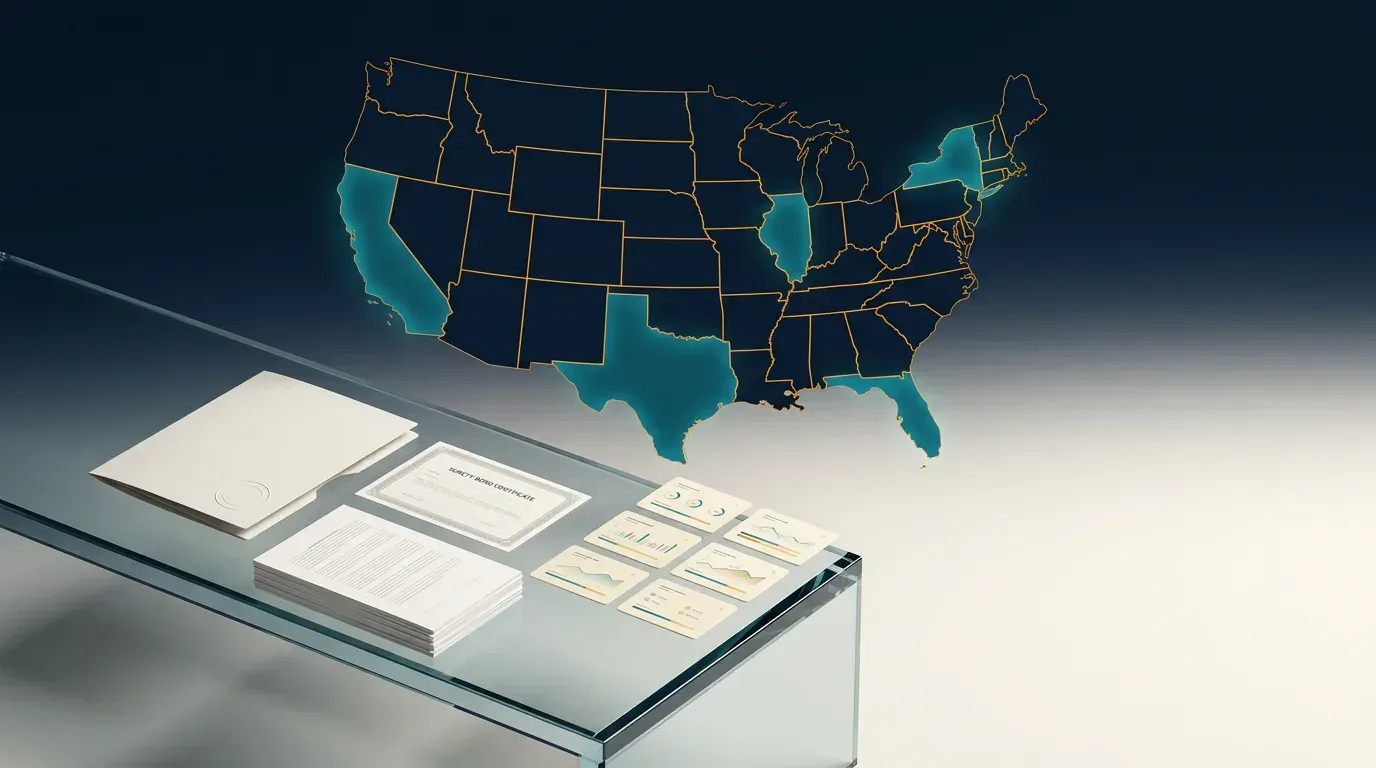
Most countries issue a single national license for money transmission activities. The United States does not.
In the US, a business wishing to operate legally as a money transmitter nationwide must apply for licenses individually in each state — meaning up to 49 separate applications, with 49 different regulatory agencies, 49 distinct fee structures and surety bond requirements. This is one of the most complex legal frameworks in the global financial services industry.
This article analyzes the specific differences between states in issuing the Money Transmitter License (MTL), explains the reasons behind this fragmentation, and provides a framework for businesses — particularly fintechs, international money transfer companies and crypto/VASP platforms — to make strategic decisions when entering the US market.
1. What is a Money Transmitter License (MTL)?
A Money Transmitter License is a permit issued by state-level financial regulatory agencies, allowing businesses to receive, hold and transmit money or monetary value on behalf of customers. The scope covers both fiat currency and digital assets in most states.
Activities requiring an MTL typically include:
- International money transfer services (remittance)
- Issuance and sale of payment instruments
- Payment processing involving holding customer funds
- Digital asset conversion and custody activities (depending on the state)
Operating without a valid MTL is a legal violation that can lead to civil penalties, criminal prosecution and asset forfeiture. Regulators are increasingly intolerant of the "launch first, ask for permission later" model.
2. Two-Tier Regulation: Federal and State
The US legal system applies a parallel two-tier regulatory model: federal level through FinCEN and state level through local financial regulatory agencies. Both are mandatory and completely independent of each other.
MSB Registration with FinCEN (Federal Level)
Every business engaged in money transmission in the US must register with FinCEN (Financial Crimes Enforcement Network) as a Money Services Business (MSB). Initial registration is free, renewal is every two years and also free. The registration deadline is within 180 days of starting operations — violating this deadline is a federal offense.
State-Level MTL
This is where it becomes complex and expensive. Each state independently defines "money transmission," application procedures, fee levels, surety bond requirements, minimum capital requirements and periodic reporting obligations. No two states have exactly the same requirements.
| Criteria | Federal (FinCEN) | State (MTL) |
|---|---|---|
| Scope | All 50 states | 49 states (except Montana) |
| Cost | Free (renewal every 2 years, also free) | $250 – $5,000+/state |
| Surety bond | Not required | $25,000 – $7,000,000 |
| Processing Time | Immediate | 3 – 24 months |
| Complexity Level | Low | Very High |
3. Why Do States Have Different Requirements?
The US Constitution grants states significant autonomy in regulating consumer finance. Each state enacts its own laws, so a business wishing to serve customers in all 50 states must apply for up to 49 separate licenses.
The differences stem from several factors:
- Economic scale and risk level: States with large financial activities (California, New York) apply higher standards to protect consumers.
- Business attraction policies: Some states (Texas, Wyoming) actively reduce barriers to attract fintech and crypto companies.
- Legal infrastructure: States with smaller regulatory teams often process applications more slowly.
- Different definitions of "money transmission": Some states expand the definition to include digital assets; others do not.
4. Comparing MTL Requirements by Key States
Below is a summary of the most important states that businesses typically consider when entering the US market.
| State | Regulatory Agency | Application Fee | Surety Bond | Processing Time | Complexity Level |
|---|---|---|---|---|---|
| California | DFPI | $5,000 | $250,000 – $7,000,000 | 12 – 18 months | Very High |
| New York | NYDFS | $1,000 – $5,000 | $100,000 – $500,000 | 12 – 24 months | Very High |
| Texas | TDOB | $1,000 – $2,000 | $25,000 – $500,000 | 3 – 6 months | Medium |
| Florida | OFR | $250 – $500 | Volume-based, max $250,000 | 4 – 8 months | Medium |
| Illinois | IDFPR | $250 – $1,000 | $25,000 – $100,000 | 4 – 6 months | Medium |
| Washington | DFI | $250 – $1,000 | $10,000 – $500,000 | 3 – 6 months | Low – Medium |
| Montana | Not applicable | Exempt | Not required | Not applicable | Exempt |
California: The Most Stringent
California is regulated by the DFPI (Department of Financial Protection and Innovation). Application fees start at $5,000 and surety bonds range from $250,000 to $7,000,000 depending on transaction volume. The process typically takes 12–18 months. Additionally, effective July 1, 2026, California implements the Digital Financial Assets Law (DFAL), creating a separate legal framework for digital asset businesses serving California residents.
New York: The Most Complex
New York is considered the state with the strictest legal requirements in the US. Processing times can reach up to 24 months, with the highest compliance expectations nationwide. For activities involving digital currency, businesses must also apply for a separate BitLicense in addition to the standard fiat MTL.
Texas and Washington: Business-Friendly
Texas and Washington are often the preferred choices for early-stage startups. Processing times of 3–6 months, moderate costs, and relatively transparent processes. Many businesses apply in these two states first, then gradually expand to the remaining states.
5. The MTMA Law and Harmonization Trends
The fragmentation among states has long been a burden for businesses wishing to operate nationwide. To address this issue, the Conference of State Bank Supervisors (CSBS) developed and passed the Money Transmission Modernization Act (MTMA) in August 2021.
The MTMA is a unified national standard focusing on three main areas: capital requirements (net worth), surety bonds and permissible investments (liquidity). The goal is to minimize disparities between states and allow businesses to expand operations more efficiently through a multistate supervisory system.
However, the MTMA is not federal law and does not create a single national license. Businesses must still apply individually in each state. What the MTMA does is standardize definitions, exemptions and financial requirements to make the process less legally costly.
To date, over 40 states have adopted the MTMA in whole or in part. However, the level of adoption is uneven: some states fully integrate it, others only adopt parts, and provisions related to digital currency are often removed from state-level legislation.
6. MTL and Crypto/VASP Businesses
Digital currency companies face an additional layer of complexity compared to traditional fiat money transmission businesses. Most states now consider digital currency transmission activities as "money transmission" and require an MTL. However, the specific handling varies significantly between states.
Three typical regulatory models:
- New York: Requires both licenses — MTL for fiat activities and BitLicense (23 NYCRR Part 200) for activities involving digital currency. This is the only state in the US applying this dual structure. The BitLicense has a $5,000 application fee, surety bond from $500,000 and a processing time of 12–24 months.
- California: In addition to the fiat MTL, digital asset businesses serving California residents now need to apply for an additional DFAL (Digital Financial Assets Law) license, effective from July 1, 2026.
- Texas and Wyoming: Provide a relatively friendlier legal framework for blockchain and crypto businesses, often handling digital activities under the existing MTL framework.
For VASP businesses considering the US market, it is crucial to analyze the specific business model — particularly the custodial structure and cash flows — before determining which state requires which type of license. Learn more about GSS Legal's Crypto & VASP Licensing services to better understand the approach for each business model.
7. Strategy for Choosing States to Apply First
No business should apply for MTLs in all states simultaneously — unless they have sufficient resources to manage 49 parallel processes. A practical approach is phased implementation.
Phase 1 — States with fast processes and moderate costs: Texas, Washington, Florida and Illinois are often reasonable first choices. These states allow businesses to launch products and test the market while continuing to apply in more complex states.
Phase 2 — Large states with strict requirements: California and New York can account for up to 30–40% of the total potential revenue of a nationwide money transmission business. Due to long processing times (12–24 months), applications should be submitted early even if immediate operation is not required.
Phase 3 — Gradual expansion based on actual needs: Build the license portfolio according to growth momentum, prioritizing states with actual customers before investing in less common states.
The overall cost to be present in all 49 states can exceed $1 million USD when accounting for application fees, surety bonds, legal consultation fees and annual operational costs. Therefore, jurisdiction selection advisory is an essential step in the plan to enter the US market.
8. Compliance Obligations After Licensing
Receiving an MTL is just the starting point. Licensed businesses must maintain continuous compliance obligations under the Bank Secrecy Act, FinCEN regulations and individual state requirements.
Key obligations include:
- AML/CFT Program: Establish a written policy, appoint a compliance officer, and provide regular employee training.
- KYC and Enhanced Due Diligence (EDD): Verify customer identity at onboarding; apply EDD for high-risk customers.
- Transaction Monitoring: Monitor transactions with signs of anomalies, detect structuring and concentrated transfers to high-risk addresses.
- SAR Reporting (Suspicious Activity Report): File SARs with FinCEN within 30 days of detecting suspicious activity.
- CTR Reporting (Currency Transaction Report): Report cash transactions exceeding $10,000.
- OFAC Screening: Check customers and transactions against OFAC sanctions lists in real-time.
- Record Keeping: Maintain transaction and customer records for a minimum of 5 years.
- Periodic Financial Reporting to State Regulators: Most states require annual financial reports and compliance attestations.
Violating these obligations can lead to fines of $100,000 or more per violation, license revocation and criminal prosecution. Explore GSS Legal's AML & Compliance services to understand how to build appropriate compliance infrastructure from day one of operations.
9. How GSS Legal Can Help
GSS Legal (Gofaizen & Sherle) supports clients throughout the entire process of entering the US market: from analyzing business models and identifying priority states, to preparing application dossiers, building AML/KYC programs and maintaining compliance after licensing.
With licensing experience in over 50 global jurisdictions — including Singapore MAS, Philippines PAGCOR, UAE VARA and Asian markets — GSS Legal approaches US projects from a practical perspective: starting from business goals, choosing the most efficient licensing roadmap, and ensuring the business not only gets licensed but can also operate effectively.
Related services:
- Jurisdiction Advisory — Advice on state selection and licensing roadmap
- Crypto & VASP Licensing — Specifically for digital asset businesses
- AML & Compliance — Building and operating compliance systems
- Corporate Formation — Establishing suitable legal entities before applying for MTL
- Banking & EMI/PSP — Support in opening bank accounts after obtaining licenses
Conclusion
The Money Transmitter License in the US is not a simple administrative procedure. It is a complex system of 49 separate sets of requirements, with significant differences in cost and time between states — ranging from a few months and a few hundred thousand USD in Texas, to two years and millions of USD in California or New York.
For crypto/VASP businesses, the complexity is even higher: some states require additional BitLicenses or separate digital asset licenses, and the interpretation of "money transmission" for digital assets remains inconsistent nationwide.
Making the right decision about which states to apply to first, in what order, and how to prepare the corporate structure from the outset — these are the factors that determine the speed and cost of the entire roadmap. One wrong step in the early stages can delay progress by months or incur unnecessary costs.
Start with advice from GSS Legal
If you are planning to enter the US market — whether as a traditional money transfer company, a fintech platform or a crypto/VASP business — GSS Legal can help you identify the licensing roadmap best suited to your business model and current resources.
Book a consultation →
See more: All services | Success stories | Insights